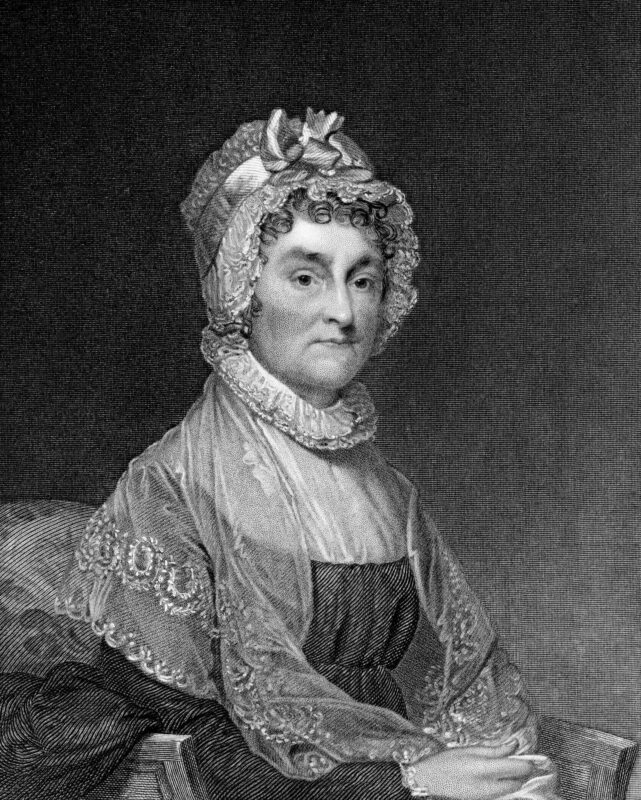
Every March, during Women’s History Month, we pause to remember the names that too often sit in the margins of our history books. When Americans think of the founding of the United States, we picture powdered wigs, parchment, and the familiar faces of Washington, Jefferson, Adams, and Franklin.
But the American founding was not a men-only enterprise.
Women were there from the beginning — organizing, influencing, financing, writing, protesting, and in some cases even fighting. They shaped the ideas and sustained the sacrifices that made independence possible.
Abigail Adams: “Remember the Ladies”
Perhaps no voice better symbolizes women’s intellectual presence during the founding than Abigail Adams. In 1776, as her husband helped shape a new government, she famously urged him to “remember the ladies” when drafting new laws.
Her words were not a demand for modern political equality, but they were a clear reminder: women were thinking deeply about liberty, law, and justice. Abigail managed the family farm and finances during long wartime absences, advised her husband politically, and preserved a written record of the era through her extensive correspondence.
The Revolution was debated in homes as much as in halls of government — and women were central to those conversations.
Mercy Otis Warren: The Pen as a Political Weapon
Before independence was declared, Mercy Otis Warren was already shaping public opinion. A playwright and political writer, she used satire and essays to criticize British authority and rally support for resistance.
Her home became a gathering place for revolutionary leaders. Her pen became a weapon.
After the war, she published one of the earliest histories of the American Revolution — an extraordinary achievement at a time when women were largely excluded from formal political life.
Ideas win revolutions. Women helped write those ideas.
Phillis Wheatley: Liberty in Verse
Enslaved as a child and brought to Boston, Phillis Wheatley became one of the most remarkable literary voices of the era. Her poetry — steeped in classical learning and moral reflection — engaged directly with themes of freedom and human dignity.
Wheatley corresponded with leading figures of the Revolution and used her writing to highlight the contradictions between liberty and slavery.
Her life forced Americans to confront a central question of the founding: Who is liberty for?
Deborah Sampson: Service in Disguise
Not all contributions were written. Some were lived in extraordinary courage.
Deborah Sampson disguised herself as a man and enlisted in the Continental Army. She fought, was wounded, and completed her service before her identity was discovered. Years later, she successfully petitioned for a military pension.
Her story reminds us that women did not simply support the Revolution from the sidelines — some bore its physical costs.